
Boston Stamped Concrete Experts

Menu
Why Boston’s Climate Demands Specialized Foundation Repair
Concrete Foundation Repair Boston
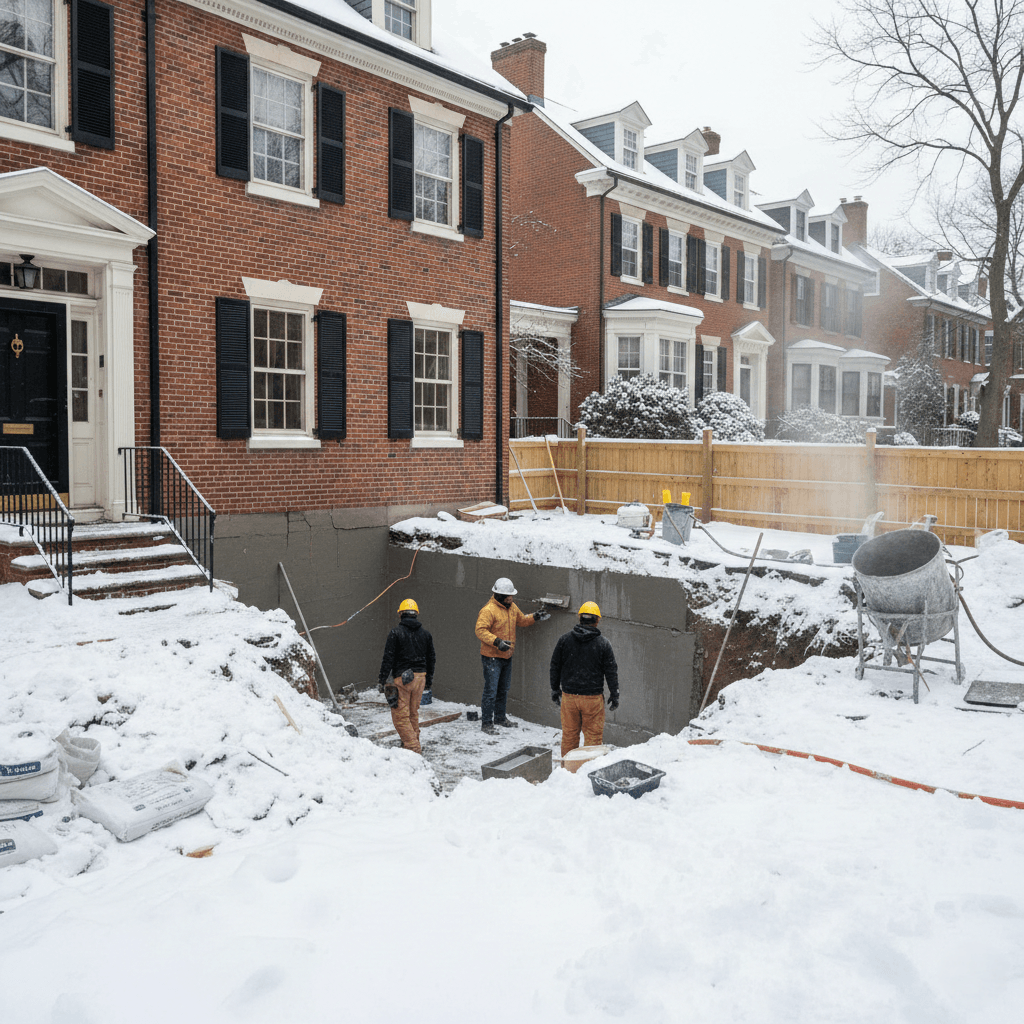
Boston’s unpredictability in terms of weather, with extreme cold in the winter, hot, muggy days during the summer months, and high levels of rain throughout the year, takes a tremendous amount of stress off residential home foundations. As a result, there is a high degree of likelihood that cracks will develop in your home’s foundation, as well as the potential for the foundation to shift or be damaged over time. Since Boston has an excessive number of freeze-thaw cycles and has clay-rich soils, the need for a solution that addresses both the structural integrity of your home and its ability to withstand moisture is greater than in many other areas across the country. Therefore, it is essential to act promptly if you see damage to your home’s foundation to avoid having to pay for costly repairs in the future.
How does Boston’s weather affect my foundation?
Boston’s climate is tough on foundations. Temperatures below freezing cause the soil to swell, then as the temperature rises, the soil contracts again. This freeze/thaw process puts pressure on the foundation walls and causes them to crack and shift. Heavy rain and melting snow can also cause the soil to become saturated, creating the potential for water to leak into your basement. Homes located in flood zones such as Charlestown and East Boston face a greater risk of water leakage due to flooding.
Additionally, Boston’s clay-rich soil contributes to foundation problems. Clay soils absorb large amounts of water, causing the soil to expand. As the soil dries out, it shrinks. This swelling/shrinking of the soil forces the foundation to shift over time, which can cause structural damage such as cracks in the walls, uneven flooring, and misaligned doors and/or windows. Therefore, specialized concrete foundation repair techniques are needed to combat these problems and preserve your home.
What do I look for if I think my foundation needs repair?
Many times, the initial damage to a foundation is minor; however, if left unaddressed, it can cause serious damage over time. Here are some indicators that you may need to have your foundation inspected for possible repair:
- Horizontal or stair-step cracks in brick/concrete walls
- Uneven/sloping floors
- Sticking doors/windows
- Water in the basement (seepage/dampness)
- Gaps around windows/doors
If you see any of these symptoms, contact a foundation repair professional immediately. Early action may minimize additional damage and save you money.
What are the most successful ways to repair a foundation damaged by Boston’s weather?
Since Boston’s weather conditions (temperature fluctuations and high levels of precipitation), the most successful types of foundation repair include:
- Piering: Piers made of steel are drilled into stable soil at the bottom of your foundation and used to provide support and elevate the foundation.
- Wall Anchors: Anchor systems can provide stabilization to bowing foundation walls created by soil pressure.
- Carbon Fiber Straps: Can reinforce cracked/bowing foundation walls without having to excavate the wall.
- Waterproofing: Exterior drainage systems and sealants are applied to exterior surfaces to prevent water damage to the foundation.
- Slabjacking: Grout mixture is pumped under the foundation to raise/lower it back to its original position.
In many cases, piering and waterproofing are the two best options for a homeowner in Boston. Piering provides the structural reinforcement needed to correct foundation problems, while waterproofing protects the foundation from future damage due to water.
How do I choose the right repair method?
To determine which repair method(s) to utilize, consider the nature and extent of the damage. Consider the following:
- Cracks: Small cracks may only need to be sealed; larger cracks may require carbon fiber straps or piering.
- Bowing Walls: Wall anchors or carbon fiber straps can help stabilize bowing walls.
- Settlement: Piering or slabjacking can help to lift and level a settling foundation.
- Water Damage: Installing waterproofing and drainage systems can help homes in flood-prone areas.
A foundation repair professional can evaluate your home and recommend the appropriate repair solution. Since different soil and climate conditions exist throughout the Boston area, local knowledge is important.
What is involved in the foundation repair process?
Foundation repair is a multi-faceted process requiring both technical skill and experience. Here is what you can expect during the repair process:
Inspection:
An evaluation of the damage to your home and the recommendation of a repair plan.
Excavation:
Removal of soil surrounding your foundation, if needed, to expose the foundation.
Repair:
Implementation of the recommended repair method (i.e., piering, wall anchors).
Waterproofing:
Installation of drainage systems and application of sealants to prevent future water damage to your foundation.
Restoration:
Landscaping and interior repairs are completed to restore your property.
Typically, the entire process will take anywhere between one week to two weeks, depending upon the severity of the damage. Once the repair is complete, your home will have a solid and durable foundation that will protect your investment for years to come.
Who should I hire to repair my foundation?
Selecting the right foundation repair contractor is crucial to the successful completion of your foundation repair. Look for the following characteristics in a contractor:
Experience:
Hire a contractor who specializes in repairing foundations.
Licenses and Insurance:
Verify the contractor is properly licensed and insured.
References:
Ask for references from previous customers to ensure they were satisfied with the service received.
Warranties:
Trustworthy contractors provide warranties on their work.
Local Knowledge:
Boston’s unique combination of soil and climate conditions necessitates specialized knowledge.
A reliable contractor will guide you through each phase of the repair process – from inspection to repair – and ensure that your foundation is returned to its original condition.
How do I keep my foundation from being damaged again in the future?
Following the completion of your foundation repair, there are several actions you can take to reduce the likelihood of damage occurring to your foundation in the future:
Maintain Gutter Systems and Downspouts:
Direct water flow away from your foundation.
Grade Your Yard:
Keep the yard sloped so that no water collects near the foundation.
Install a Sump Pump:
Manage excess water in your basement/crawl space with a sump pump.
Check for Cracks:
Periodically inspect your foundation for any new damage.
Regulate Moisture Levels:
Utilize a dehumidifier in your basement to maintain optimal moisture levels.
By taking these measures, you can significantly prolong the life of your foundation and avoid expensive repairs.
Boston Stamped Concrete Experts: Protect Your Home from Foundation Issues
At Boston Stamped Concrete Experts, we are experts in developing foundation repair services designed for Boston’s climate. We have a professional staff using modern methods and equipment to provide stabilization and waterproofing for your home’s foundation, which will help it last longer. If you have cracks, bowing walls, or water issues in your home, our company will develop a solution with you that will meet your needs.
Do not delay, as allowing damage to your home’s foundation to become a big problem. Contact us today to make arrangements for an evaluation and protect your home.
LATEST POSTS
Concrete Pouring Methods That Reduce Winter Cracking in Boston
December 17, 2025
No Comments

Why Boston’s Climate Demands Specialized Foundation Repair
December 13, 2025
No Comments