
Boston Stamped Concrete Experts

Menu
Concrete Pouring Methods That Reduce Winter Cracking in Boston
Pouring Concrete Boston
Freezing temperatures combined with the continuous freeze-thaw cycle make winter time an ideal environment for concrete placement. If improper procedures are followed, there is a potential for cracks and spalling of the surface as well as rapid deterioration. But with proper procedures, you can have the assurance that your concrete surfaces will be strong and crack-free even in the toughest weather conditions. Whether it is placing a driveway, patio, or foundation, these techniques will allow you to get lasting results.
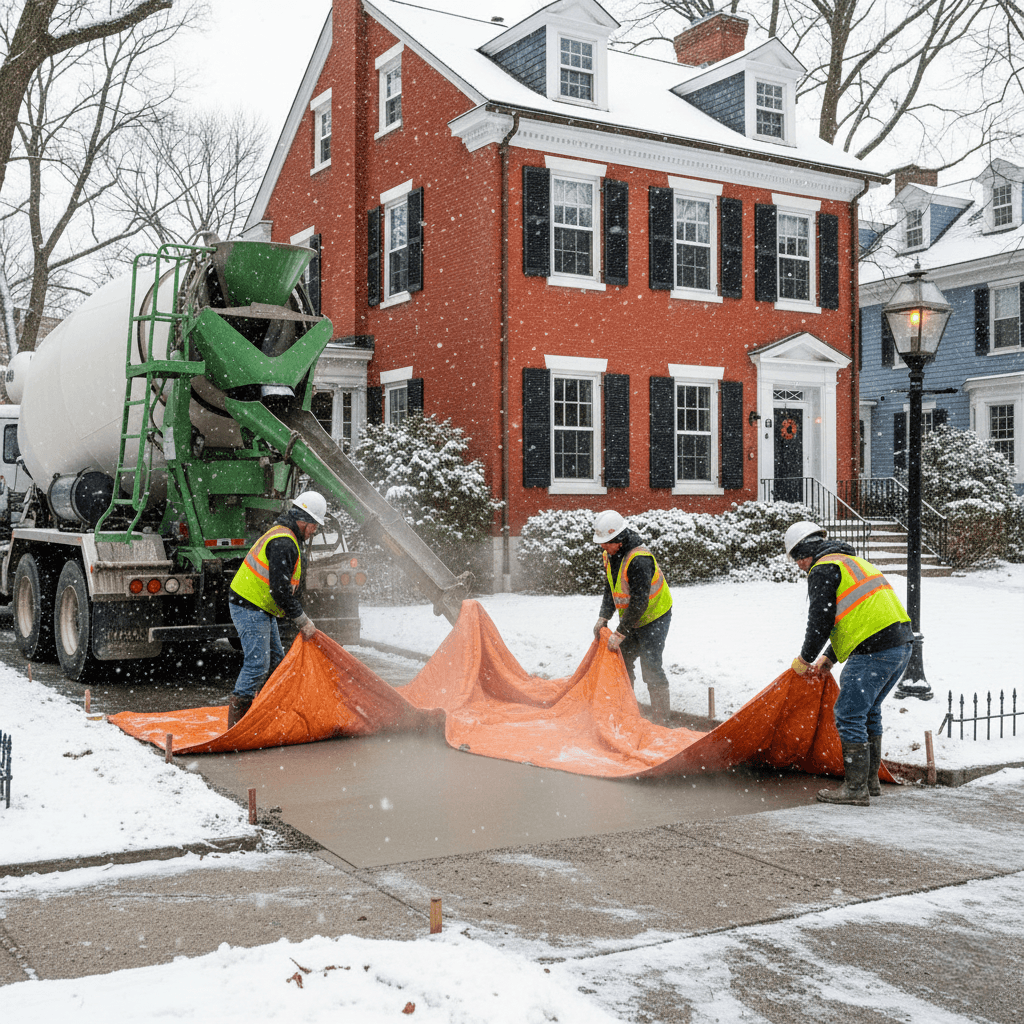
Why Winter Concrete Pouring Is Challenging in Boston
Winter is a difficult season for concrete to be poured, because it freezes. The hydration process, which causes concrete to harden, occurs at a slower pace when the concrete is exposed to cooler temperatures. Therefore, concrete that is poured during the winter months can become weak and develop cracks due to the freezing and thawing of the water inside the concrete. Freeze/thaw cycles also make it difficult for the water inside the concrete to remain constant, causing the water to expand/contract and create internal pressure on the concrete, ultimately developing cracks.
If you are a homeowner living in a neighborhood such as Dorchester or Somerville and have noticed that your winter weather is particularly severe, you need to use the correct method for pouring concrete. If you pour concrete properly, it will cure well and last for years to come.
Ways to Minimize Cracking in Concrete During the Winter Months
There are many ways to minimize cracking in concrete during the winter months. Some of these methods include:
Use Concrete Accelerators:
There are additives available that can accelerate the curing process and decrease the likelihood of freezing.
Keep the Concrete Insulated:
Using insulating blankets or an enclosed area with a heating element will keep the concrete at the optimal temperature for curing.
Adjust the Concrete Mix:
Changing the amount of water in the mix to a lower percentage of water to cement ratio will result in less shrinkage and cracking of the concrete.
Create Control Joints:
Create control joints to allow the concrete to crack along a predetermined line.
Do Not Overwork the Surface:
Overworking the surface of the concrete will weaken it and cause it to crack.
Seal the Concrete After It Has Cured:
Applying a sealant to the surface of the concrete will protect it from the effects of moisture and deicing salts.
Each of these methods will help to ensure that the concrete cures correctly and remains free of cracks even in the harsh winter conditions in Boston.
How Concrete Accelerators Help Concrete Cure Faster
Concrete accelerators are additives to the concrete that increase the curing process, which in turn increases the chances that the concrete will not freeze before it has gained enough strength. They increase the curing process by accelerating the hydration process, which allows the concrete to gain strength faster than if they were not added. Because of the extreme temperatures that occur in Boston’s winter, concrete accelerators are very beneficial.
Some examples of common concrete accelerators include calcium chloride and non-chloride alternatives. Although calcium chloride is an excellent option for concrete, it can cause corrosion of the steel reinforcement in the concrete. As a result, non-chloride concrete accelerators are often used in conjunction with reinforced concrete. A professional contractor should be able to determine the most suitable type of concrete accelerator for your project.
How to Insulate Concrete to Maintain Optimal Curing Conditions
Keeping the concrete insulated will allow you to maintain the temperature necessary for the concrete to cure correctly. Here are some methods to keep the concrete insulated:
Insulating Blankets:
Place insulating blankets over the top of the concrete to retain the heat.
Heated Enclosures:
Use temporary enclosures with heating elements to keep the concrete in a warm environment.
Hay or Straw:
For small projects, hay or straw can be placed on top of the concrete to provide insulation.
Maintaining a consistent temperature is especially important in Boston’s winter climate, where temperatures can drop rapidly. Maintaining a consistent temperature throughout the curing process will ensure that the concrete will cure correctly and gain the necessary strength.
How to Adjust the Concrete Mix for Winter
The composition of the concrete mixture affects the potential for cracking of the concrete during the winter. Here are some ways to modify the concrete mixture for colder weather:
Less Water:
Less water in the mixture will produce less shrinkage and cracking, as there will be less water available to evaporate.
Entrained Air:
Adding air entrainment to the mixture will introduce small amounts of air bubbles into the mixture, allowing the water to expand without cracking the concrete.
Warm Water:
Mixing the concrete with warm water will help to maintain the temperature of the concrete during the mixing and pouring process.
A professional contractor will be able to assist you in adjusting the concrete mix for the colder weather of Boston and ensure that the concrete will be strong and resistant to cracking.
Creating Control Joints to Control Where Cracks Will Form
Control joints are intentionally created grooves or cuts in the concrete that dictate where the concrete will crack. By controlling the location of the cracks, you can eliminate the appearance of uncontrolled cracking in your concrete. Here are the steps to create control joints:
Space Between Joints:
The space between control joints should not exceed 2–3 times the thickness of the concrete slab in feet (for example, a 4-inch thick slab would require a spacing of 8–12 feet).
Depth of Joint:
The depth of the joint should be 1/4 of the thickness of the slab.
Timing:
The control joints should be installed within 24 hours of the concrete being poured to avoid uncontrolled cracking.
Control joints are especially important in areas such as Boston, where the freeze/thaw cycle can put a great deal of pressure on the concrete.
How to Properly Finish the Concrete
Correctly finishing the concrete is essential to avoiding surface weakness and cracking. Here are the tips to finish the concrete correctly:
Overworking:
Do not overwork the surface of the concrete, as doing so can weaken the concrete and increase the possibility of cracking.
Smooth Surface:
Use a bull float to smooth the surface of the concrete to produce a uniform surface.
Broom Finish:
For driveways and sidewalks, a broom finish will provide traction and reduce the likelihood of slipping.
Allow the Concrete to Cure Correctly:
Allow the concrete to cure slowly and consistently to gain its full strength.
By properly finishing the concrete, you will ensure that your concrete surface is durable and resistant to winter damage.
Protective Seals to Protect the Concrete Surface
Protective seals applied to the concrete surface will protect the concrete from moisture, deicing salts, and the effects of the freeze/thaw cycle. Here are the steps to apply protective seals:
Penetrating Sealant:
Use a penetrating sealant for driveways and sidewalks, and a topical sealant for decorative surfaces.
Apply Sealant at the Correct Time:
Apply the sealant to the surface of the concrete once it has cured completely, usually 28 days after the concrete was poured.
Apply Sealant Regularly:
Sealants will deteriorate over time; therefore, apply new sealant every 2–3 years.
Applying protective seals to the surface of the concrete is especially important in areas such as Boston, where the presence of moisture and deicing salts can be detrimental to the health of the concrete.
Finding the Best Contractor to Complete Your Winter Concrete Project
Finding the right contractor is essential to the successful completion of your winter concrete project. Here are some characteristics to look for in a contractor:
Experience:
Look for a contractor with experience completing winter concrete projects.
License and Insurance:
Verify that the contractor has the proper licenses and insurance to complete your project.
References:
Request references from previous customers to gauge their level of satisfaction.
Knowledge of Local Climate:
Choose a contractor with knowledge of the local climate in order to understand the unique challenges of the climate.
Clear Pricing:
Choose a contractor that provides clear pricing for the project, rather than one that is vague about costs or pressures you to make hasty decisions.
A reputable contractor will assist you through each stage of the project, including the selection of the concrete mix, the application of the finishing coats, etc.
Boston Stamped Concrete Experts – Experts in Winter Concrete Pouring Methods
At Boston Stamped Concrete Experts, our team of experts specializes in winter concrete pouring methods designed to minimize cracking and maximize durability. We have extensive experience in providing services that can endure the harsh winters of Boston. Whether you want to build a new driveway, patio, or foundation, our team of experts will collaborate with you to provide the ideal solutions for your needs.
Do not allow winter damage to destroy your concrete surfaces. Contact us today to learn how we can help you create a durable, crack-resistant surface.
LATEST POSTS
Concrete Pouring Methods That Reduce Winter Cracking in Boston
December 17, 2025
No Comments

Why Boston’s Climate Demands Specialized Foundation Repair
December 13, 2025
No Comments