Boston Stamped Concrete Experts

Menu
Concrete Resurfacing for High-Salt Boston Winters
Concrete Resurfacing Boston
The harsh winters in Boston can have a very damaging effect on concrete surfaces. The repeated freezing and thawing of water on the surface, as well as the salt that is used for ice control during winter months, will cause damage in the form of cracking and spalling, which can lead to further deterioration of the surface. However, if you notice that your driveways, patios, or walkways are beginning to show signs of deterioration, it may be beneficial to apply a concrete resurfacing system to repair and extend the serviceable life of your concrete surfaces at a lower cost than full replacement and with less labor time required for completion.
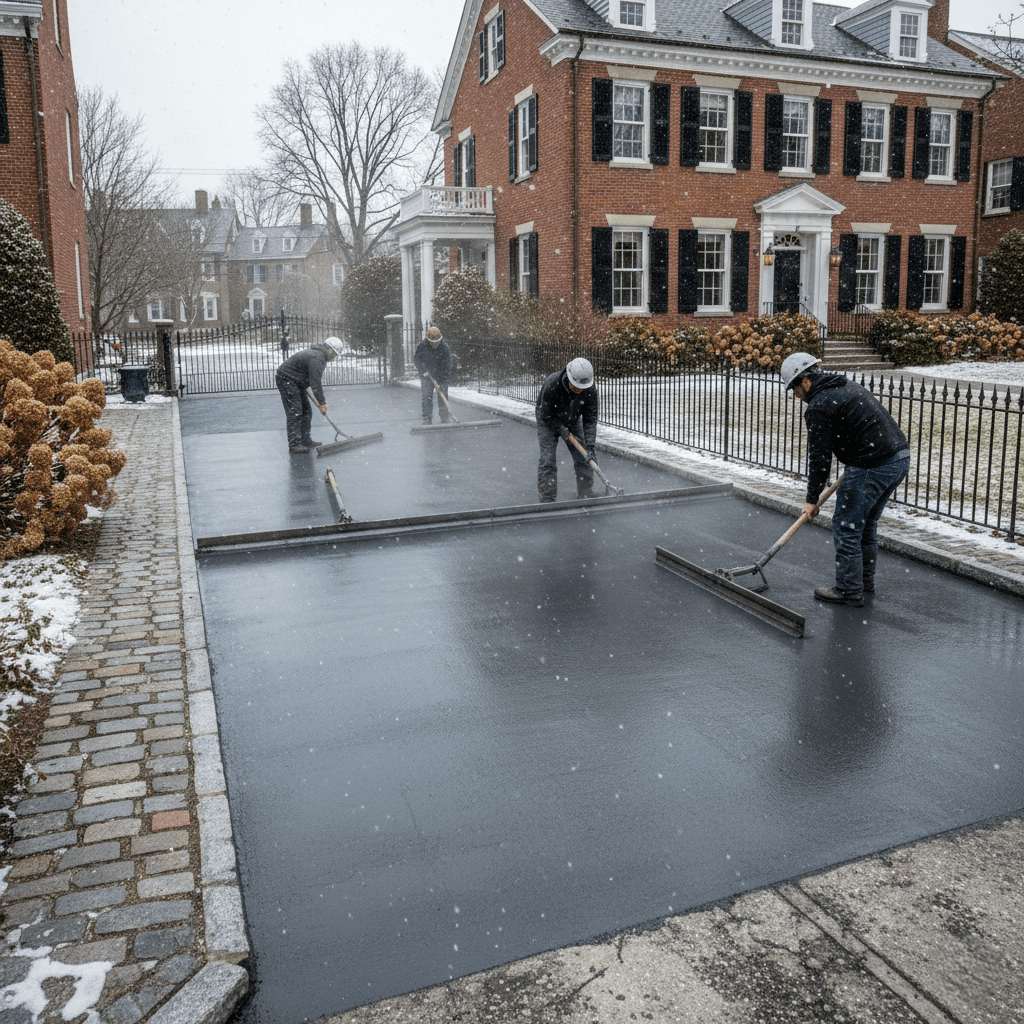
What Boston’s Harsh Winter Weather Requires from Concrete Resurfacing
Boston’s extreme winters pose special problems for all concrete surfaces. Using salt to melt ice is the most effective method to protect driveways, sidewalks, and patios from freezing temperatures; however, using salt to melt ice causes the salt to penetrate the surface of the concrete, which weakens the surface and creates cracks in the surface. The constant freeze-thaw cycle further accelerates the deterioration of the surface as water penetrates into the cracks in the surface and then freezes and expands, creating larger cracks in the surface. As the freeze-thaw cycle continues, the concrete deteriorates and begins to spall (spalling means the surface of the concrete peels away). In order to address these problems, resurfacing provides a new, durable, salt-resistant coating to cover and protect the weakened concrete surface.
Homeowners living in coastal communities such as South Boston or Quincy, where salt spray is prevalent, should be particularly concerned about resurfacing their concrete. This type of resurfacing not only restores the surface of the concrete but also applies a protective barrier of durable, salt-resistant coating to prevent additional damage to the surface.
Whatever the reason for resurfacing – whether it is to repair a damaged or cracked surface, to remove unsightly stains, or to replace an old and outdated surface – resurfacing can provide a beautiful, long-lasting finish to the surface of your concrete.
Benefits of Resurfacing vs. Replacing
Resurfacing has many advantages compared to completely replacing the concrete surface:
Cost Savings:
Resurfacing is significantly less expensive than replacing the concrete surface.
Durable Surface:
The modern resurfacing products are made to endure salt, moisture, and repeated freeze-thaw cycles.
Personalized:
Many different colors, textures, and pattern combinations are available to allow for a wide range of choices based upon the homeowner’s personal preference.
Fast Completion:
The majority of resurfacing projects can be completed within one to three days of commencing the project. This minimizes the inconvenience to the homeowner.
Low Maintenance:
Resurfaced concrete surfaces require very little maintenance beyond regular cleaning and occasional sealing.
Based on these numerous benefits, resurfacing is a good option for many Boston homeowners who want to restore their concrete without the inconvenience of completely replacing the concrete.
Types of Resurfacing Options Available
There are several types of resurfacing options available, including:
Overlays:
Thin layers of concrete are applied to the existing surface to produce a smooth, durable finish.
Stamped Overlays:
Patterns are created in the overlay to produce the appearance of brick, stone, or tile.
Micro-Topping:
Ultra-thin layers of polymer-modified concrete are applied to create a sleek, modern finish.
Spray Textures:
Textured finishes are sprayed onto the surface to increase slip-resistance.
Colored Overlays:
Colors are introduced to the overlay through the use of stains or dyes to create a personalized finish.
Among resurfacing options available to Boston homeowners, the popularity of stamped overlays is significant due to their ability to deliver both functionality and aesthetics. These resurfacing options can duplicate the appearance of natural stone or brick, allowing homeowners to add elegance to their driveway, patio, etc., without breaking the bank.
How to Determine Which Type of Resurfacing Is Best for You?
The determination of which type of resurfacing option is best for you is dependent upon your specific requirements and the condition of your existing concrete. Some items to consider when selecting a resurfacing option include:
The Condition of the Existing Concrete:
If your existing concrete is severely cracked or uneven, a thicker overlay may be required.
The Climate:
Due to the severity of Boston’s winters, you will require a salt-resistant, durable product.
Your Personal Aesthetic Preferences:
Select a finish that matches the architectural style of your home.
Budget:
Resurfacing is a cost-effective option; however, certain resurfacing options, i.e., stamped overlays, may be more costly than others.
Your professional contractor can assist you in evaluating your existing concrete and recommending the most suitable resurfacing option to meet your requirements.
The Resurfacing Process – What to Anticipate
Resurfacing is a multi-step process that requires specialized training and skill. Below is a general outline of the steps involved in the resurfacing process that you can anticipate when working with a professional contractor:
Cleaning:
The existing concrete surface is thoroughly cleaned to remove dirt, debris, and stains.
Repair:
Any cracks or damage to the existing concrete surface are repaired to prepare the surface for the resurfacing application.
Preparation:
A bonding agent is applied to the existing surface to ensure that the new resurfacing material adheres properly to the surface.
Application:
The resurfacing material is poured and spread evenly across the surface of the concrete.
Finishing:
The resurfacing surface is finished to the specified level of smoothness, texture, or stamping.
Sealing:
A protective sealant is applied to the resurfacing surface to enhance durability and protect the surface from damage caused by the elements.
Depending on the size and complexity of the project, the resurfacing process generally takes 1–3 days to complete. At the end of the process, you will have a newly restored surface of your concrete that will withstand the harshest of Boston’s winters.
Finding the Right Contractor for Resurfacing in Boston
Choosing the correct contractor for your resurfacing project is crucial to the successful completion of the project. To help you locate a qualified contractor in Boston, here are a few recommendations:
Experienced Contractors:
Look for contractors with extensive experience in the field of resurfacing.
Licensed and Insured Contractors:
Only hire contractors that are properly licensed and insured to protect yourself from potential liability.
Portfolios:
Ask the contractor to show you examples of their previous work to evaluate their quality and style.
Customer Reviews:
Research online reviews and request references to assess the level of customer satisfaction.
Detailed Estimates:
Obtain detailed estimates from various contractors to compare pricing and services.
Due to the severe weather conditions found in Boston, finding a local contractor with experience in the Boston area is essential to your resurfacing project. A competent contractor will assist you throughout the entire process, from designing to installing, to ensure that your resurfaced concrete surface meets your requirements and surpasses your expectations.
Caring for Your Resurfaced Concrete
While resurfaced concrete is relatively low maintenance, a bit of maintenance goes a long way. Follow these guidelines to maintain the appearance of your resurfaced concrete:
Regular Cleaning:
Clean debris off your surface regularly and wash with mild soap as necessary.
Re-Seal Periodically:
Seal your resurfaced concrete every 2–5 years to protect against stains, salt, and moisture.
Salt-Free De-Icers:
Avoid using salt-based de-icers during the winter months to avoid damaging the surface.
Address Minor Damage Immediately:
Repair minor cracks in the surface as soon as possible to prevent them from worsening over time.
By caring for your resurfaced concrete properly, your surface can last anywhere from 10–15 years or longer, making it a great value for your money.
Transform Your Concrete Surfaces with Boston Stamped Concrete Experts
At Boston Stamped Concrete Experts, our team specializes in delivering resurfacing solutions designed to withstand the harshest of Boston’s winters. We utilize premium materials and tested methods to restore your concrete surfaces to their original condition. Whether you need a durable driveway, a fashionable patio, or a safe walkway, we will work with you to develop a resurfacing solution tailored to your needs.
Do not allow your worn-out concrete to detract from your home’s beauty. Contact us today to discover how we can revitalize your surfaces with resurfacing.
LATEST POSTS
Concrete Pouring Methods That Reduce Winter Cracking in Boston
December 17, 2025
No Comments
Why Boston’s Climate Demands Specialized Foundation Repair
December 13, 2025
No Comments