Boston Stamped Concrete Experts

Menu
Concrete Patios Built to Resist Salt & Moisture in Boston
Concrete Patio Boston
Boston’s cold and wet weather hurts all of the exterior areas of our houses. Traditional patio materials may be harmed by the salt used to de-ice as well as the continuous dampness that we experience throughout the year, resulting in the formation of cracks, stains, and ultimately the need for expensive repairs. The extreme weather conditions experienced in Boston do not have to affect the quality or longevity of your patio; this is because concrete patios are engineered to provide long-lasting strength, durability, and style with minimal upkeep. Therefore, if you are planning to enhance your outdoor living area, below are some reasons why concrete would be the best option for your home in Boston.
Why Concrete is Required by Boston’s Extreme Weather Conditions to Have Salt and Moisture-Resistant Patios
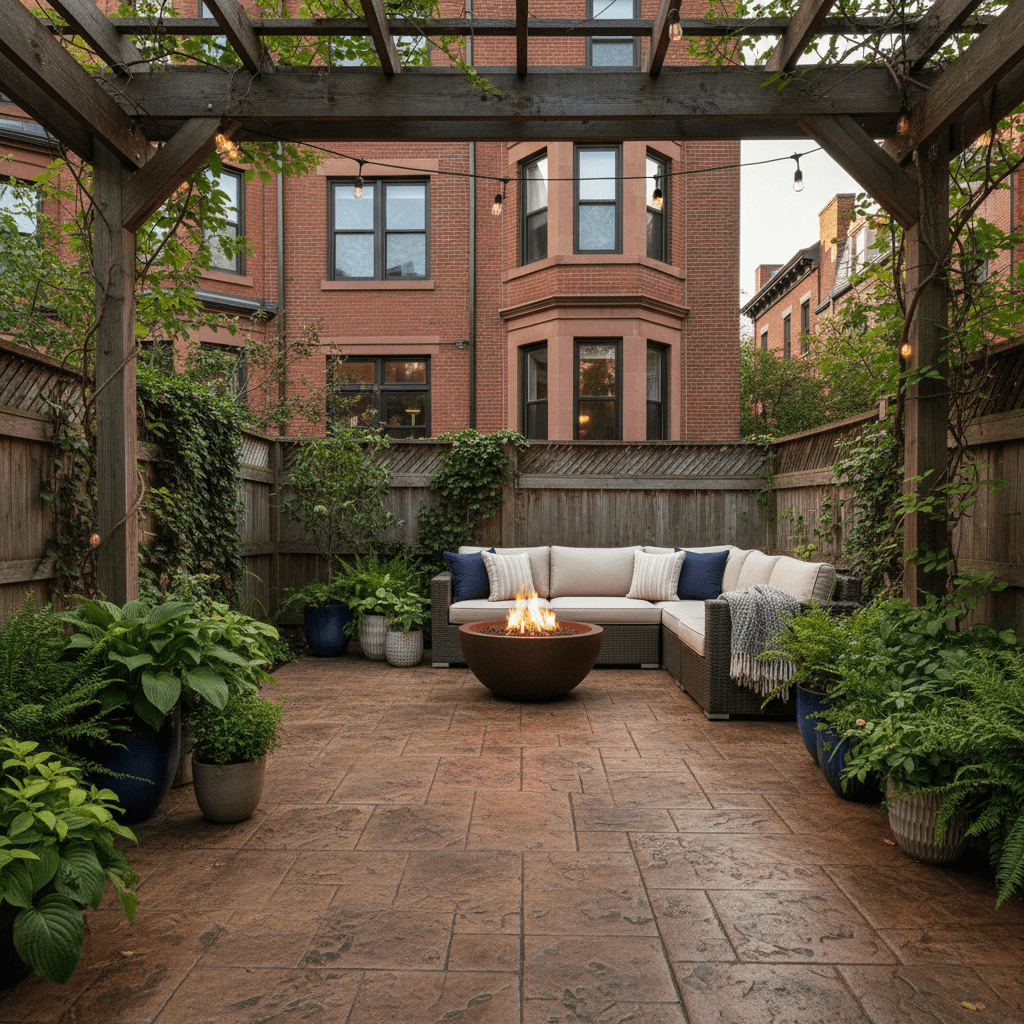
Boston weather is difficult. During the winter months, there are extremely cold temperatures and large amounts of snow. When de-icing surfaces, a large amount of salt is applied to roads and walkways. The salt and freezing temperatures cause a great deal of damage to patios that are made from wood, brick, or natural stone. Water gets into cracks in the surface of these types of patios, freezes, and then expands and causing additional damage. However, concrete is engineered to be able to endure this type of situation. The surface of concrete is impervious and does not allow for water to penetrate the surface, thus preventing water from entering the cracks in the surface. Additionally, concrete is designed to be able to withstand heavy weights without breaking or warping under stress.
For people who live in coastal areas such as South Boston or Dorchester, where salt spray is common, having a concrete patio provides a way to have a patio that will last for many years. Wood and brick patios both deteriorate, and brick patios also tend to shift over time. Concrete patios remain stable and unharmed, no matter what type of weather conditions occur.
Benefits of Concrete Patios
There are several benefits associated with using concrete patios that provide reasons why concrete patios would be a good choice for Boston residents:
Long Lasting:
With a well-constructed concrete patio, it can last 30+ years with very little maintenance, much longer than wood or paver patios.
Easy to Maintain:
Unlike wood, which has to be stained and sealed, concrete patios require only an occasional cleaning and sealing to maintain their appearance.
Customizable:
Concrete can be stamped, colored, and textured to resemble the look of stone, brick, tile, and other types of materials.
Salt Resistant:
The porous nature of concrete makes it resistant to damage caused by salt.
Water Resistant:
A properly sealed concrete patio will prevent water from penetrating into the surface of the patio, reducing the likelihood of cracks developing due to the freeze-thaw cycle and minimizing the development of mold.
All of these characteristics make concrete patios a logical and fashionable option for Boston residents.
Options Available For Designing Concrete Patios
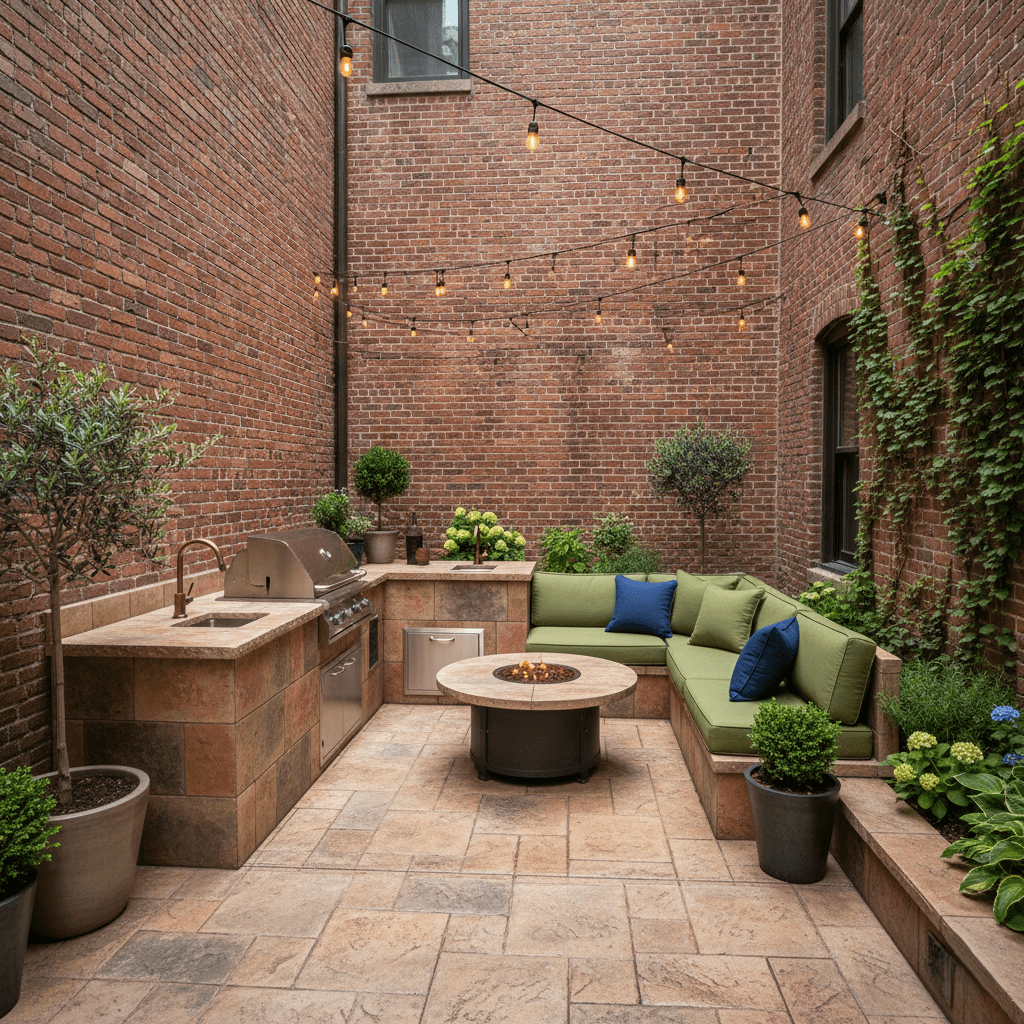
Concrete patios are highly customizable, providing Boston homeowners with the ability to create a patio design that matches their home’s architectural style and their own individual style. Some of the most commonly available design options include:
Stamped Concrete:
Creates a design that mimics the appearance of various materials, including stone, brick, and tile.
Stained Concrete:
Provides a decorative element to your patio by providing color to your patio.
Exposed Aggregate:
Provides a textured appearance to your patio with visible aggregate.
Polished Concrete:
Creates a shiny, smooth appearance to your patio.
Colored Concrete:
Allows you to choose from a variety of colors that match the color scheme of your home or provide a bold statement.
Stamped concrete is one of the most popular design options for Boston homeowners because it provides both functionality and aesthetic appeal. It creates the appearance of natural stone or brick at a lower cost, with less maintenance than those materials.
Protecting Your Concrete Patio From Damage Caused By Salt And Moisture
While concrete is inherently resistant to damage caused by salt and moisture, the longevity of your patio depends upon proper construction and maintenance. Here are some methods to protect your patio:
Apply Sealants:
Apply a high-quality sealant to the surface of your patio every 2–3 years to prevent water and salt damage.
Choose A Salt-Free De-Icer:
Instead of using rock salt to melt ice, use CMA (calcium magnesium acetate).
Sweep/Power Wash Regularly:
Clean your patio regularly to remove dirt, debris, and salt residue.
Repair Cracks Quickly:
Repair small cracks quickly to prevent them from growing larger over time.
Create Adequate Drainage:
Slight incline and adequate drainage systems ensure water does not accumulate on the surface of your patio.
By performing these tasks, you will be able to prolong the life of your concrete patio and keep it looking great for many years to come.
Concrete vs. Other Patio Materials
While there is a great deal of difference between various options for your patio, comparing the strengths and weaknesses of each will help you make the right decision. One of the key reasons that concrete is so appealing is its ability to last a very long time, be very low maintenance, and be resistant to both salt and moisture; however, how does this compare to other options available today?
Wood is a great way to add a warm and natural touch to your outdoor living space, but to keep it from deteriorating, you will need to stain it and seal it on a regular basis to protect against rot, warping, and insects. Wood is especially sensitive to the moisture and salt in Boston’s environment; therefore, while a wood patio can certainly provide years of serviceability and enjoyment, it would not be the best option for someone looking for an extremely long-lasting patio. Also, due to the fact that wood has many pores, it can be slippery and splintery, and could potentially cause serious injury when wet.
Brick patios are durable and will give your home a classic look, but can shift due to the soil beneath the patio moving or due to the expansion and contraction of water in the freeze/thaw cycle. When this happens, the brick patio will start to shift and will develop uneven surfaces, which are aesthetically unappealing and dangerous to walk upon. Brick will also need to be maintained by re-sanding the joints and replacing bricks that have been damaged. Although brick is impervious to moisture and salt, the installation and repair of a brick patio is much time-consuming than installing or repairing a concrete patio.
Stone is another great option for a patio, whether you choose flagstone, slate, or another type of natural stone. It is very durable and adds beauty to your outdoor living space. There are, however, several drawbacks to using stone for your patio. First of all, it is much more expensive than a concrete patio. Secondly, because stone is heavy, it is more difficult to install than a concrete patio. Lastly, to get a good base under your stone patio, you will likely need to hire a professional contractor, and he will need to prepare the base with a lot of additional work. Stone is impervious to moisture and salt, but it is slippery when wet, and to maintain its appearance, it will need to be sealed regularly. Some types of stone have uneven surfaces, which could also be hazardous.
Pavers, one of the great things about pavers is that you have a wide range of options when it comes to designing your patio, and they are very easy to repair, as individual pavers can be easily replaced if they are damaged. On the flip side, they do tend to shift over time, creating an uneven surface that needs to be maintained regularly. They also require a solid foundation to prevent settling, and weeds and ants can grow in the spaces between the pavers. While pavers are durable, they are not as resistant to salt and moisture as concrete, which makes them less ideal for people living in Boston, where the salt and moisture in the air can be damaging to the pavers.
Overall, a concrete patio provides a perfect blend of durability, low maintenance, and resistance to salt and moisture. While there are some benefits to using wood, brick, natural stone, and pavers for your patio, a concrete patio is the most practical choice for homeowners in Boston who want a patio that is low maintenance, long-lasting, and capable of withstanding the city’s extreme weather conditions.
Process Of Installing Concrete Patios
The installation of a concrete patio is a multi-step process that requires extensive knowledge and skill. Below is a general overview of the process of installing a concrete patio:
Clearing/Grading Site:
Remove all debris and obstructions from the area, level the ground, and compact it to create a solid foundation for your patio.
Install Forms:
Create wooden forms to shape your patio and create proper drainage.
Add Reinforcing Material:
Add steel rebar or wire mesh to reinforce your concrete and minimize the potential for cracks.
Pour Concrete:
Pour the concrete onto the forms and spread it evenly across the entire form.
Finish The Surface:
Use a trowel to smooth out the surface of the concrete, add texture to the surface, and stamp or stain the surface as needed.
Allow Concrete To Cure:
Allow the concrete to dry for several days to develop strength and durability.
Working with a professional contractor to install your concrete patio ensures that the job will be completed correctly the first time. Weather conditions in Boston can make it difficult to install a patio; therefore, it is recommended to hire a local contractor with experience in installing concrete patios.
Finding A Reliable Contractor In Boston
It is essential to select the correct contractor to complete your concrete patio project. Below are a few ways to find a reliable contractor in Boston:
Experience:
Find contractors with a proven history of installing concrete patios.
Licensing & Insurance:
Make sure that the contractor is licensed and insured to protect you from liability.
Portfolios:
Ask to view portfolios of previous work to determine the contractor’s quality of work and style.
Online Reviews:
Review online reviews and contact previous customers to determine if they were satisfied with the service provided.
Quotes:
Receive quotes from multiple contractors and compare prices and services offered.
Local contractors with experience in the Boston area are particularly important when selecting a contractor for a patio installation in Boston. Local contractors are familiar with the specific weather and soil conditions in the area and will be better equipped to guide the design and installation process to ensure that your patio meets your expectations and lasts for years to come.
Enhance Your Outdoor Living Space Using Boston Stamped Concrete Experts
At Boston Stamped Concrete Experts, we specialize in designing and constructing durable and attractive concrete patios to enhance your outdoor living space. Our team of skilled experts utilizes the highest-quality products and established methods to produce a product that will last. Whether you’re looking for a classic design or a custom stamped design, we’ll collaborate with you to design a patio that fits your taste and withstands the harshest of Boston’s weather.
Do not settle for a patio that requires a lot of maintenance or doesn’t complement your home’s aesthetic. Select concrete for a long-lasting, low-maintenance solution that increases the value of your home. Contact us today to learn more about our services and how we can improve your outdoor space.
LATEST POSTS
Concrete Pouring Methods That Reduce Winter Cracking in Boston
December 17, 2025
No Comments

Why Boston’s Climate Demands Specialized Foundation Repair
December 13, 2025
No Comments